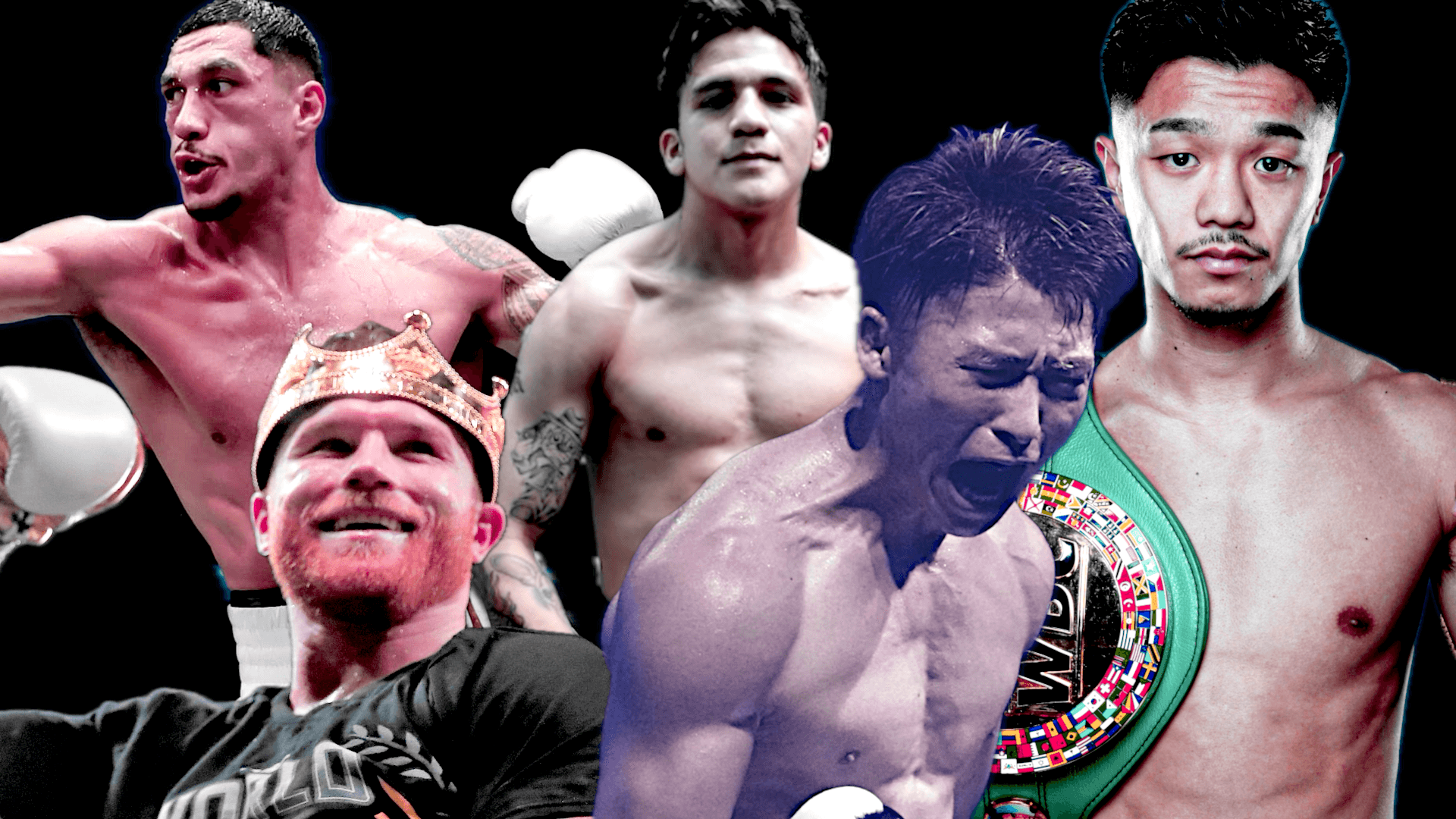
By mid-March, our pound-for-pound rankings continue to reflect a clear principle: hierarchy is shaped not only by talent and resume, but also by competitive consistency. Within that framework, Naoya Inoue remains the clear number one. His profile is elite across the key indicators, from opposition quality to overall efficiency, while his record remains unbeaten. The decisive factor, however, may be his activity. Four fights in 2025, with one already scheduled in 2026 against the number two fighter in the P4P rankings, no less, all in world-title circumstances: at this stage, no other fighter combines excellence and frequency quite as convincingly.
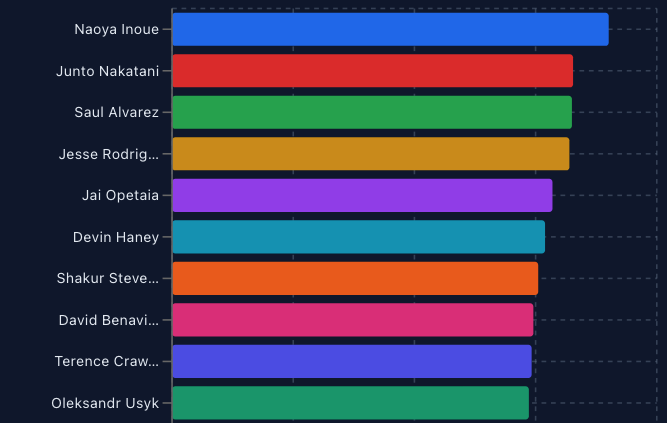
Junto Nakatani's position at number two is the ranking's main surprise. On instinct alone, many observers would probably not place him that high. Yet the statistical case is genuine. His metrics are strong in almost every category, supported by good activity, consistent performances in meaningful fights and a notably stable overall profile. Even if his latest outing was not his most convincing, the broader body of work remains strong enough to support such a placement.
Saul Alvarez remains third. His recent activity is lower than that of several other names in the top 10, but the depth of his resume still carries substantial weight. His level of opposition and the quality of his references remain among the strongest in boxing. Jesse Rodriguez follows in fourth place, backed by rapid progression and an already impressive collection of world-title victories. Jai Opetaia rounds out the top five with a profile that draws less attention publicly, but stands up very well under metric-based analysis.
The lower half of the top 10 says a great deal about the model itself. Devin Haney sits sixth, followed by Shakur Stevenson, David Benavidez, Terence Crawford and Oleksandr Usyk. All of them post elite numbers in several major areas. What limits them is competitive pace. In this system, activity is not a secondary adjustment; it is a central part of the pound-for-pound evaluation.
That approach helps keep the rankings connected to the present rather than to reputation alone. Stevenson, Benavidez, Crawford and Usyk can all rise quickly if they return to a more active schedule in the coming months. On the other hand, even a major resume does not fully protect a fighter from the effects of inactivity. That is also why Dmitry Bivol is currently outside the top 20. It is important to note, however, that his absence is linked to injury rather than simple inactivity by choice. Once he is able to compete regularly again, a quick return to the upper tier of the rankings would be entirely plausible.