Early 2026 gives the impression of emptiness in boxing: few major fights, several matchups without real sporting stakes, and a growing sense of distance between the prestige of the names and the actual quality of the spectacle.
The start of 2026 is not just light on big fights. More than that, it gives the impression of a sport struggling to produce occasions worthy of its names. The prevailing feeling is not that of a season slowly building, but of a sport suspended in a kind of drift, caught between events promoted as major and fights that leave very little behind once they are over. That impression is even stronger because several headline names dominate the conversation without always facing the kind of opposition that would give real weight to their careers.
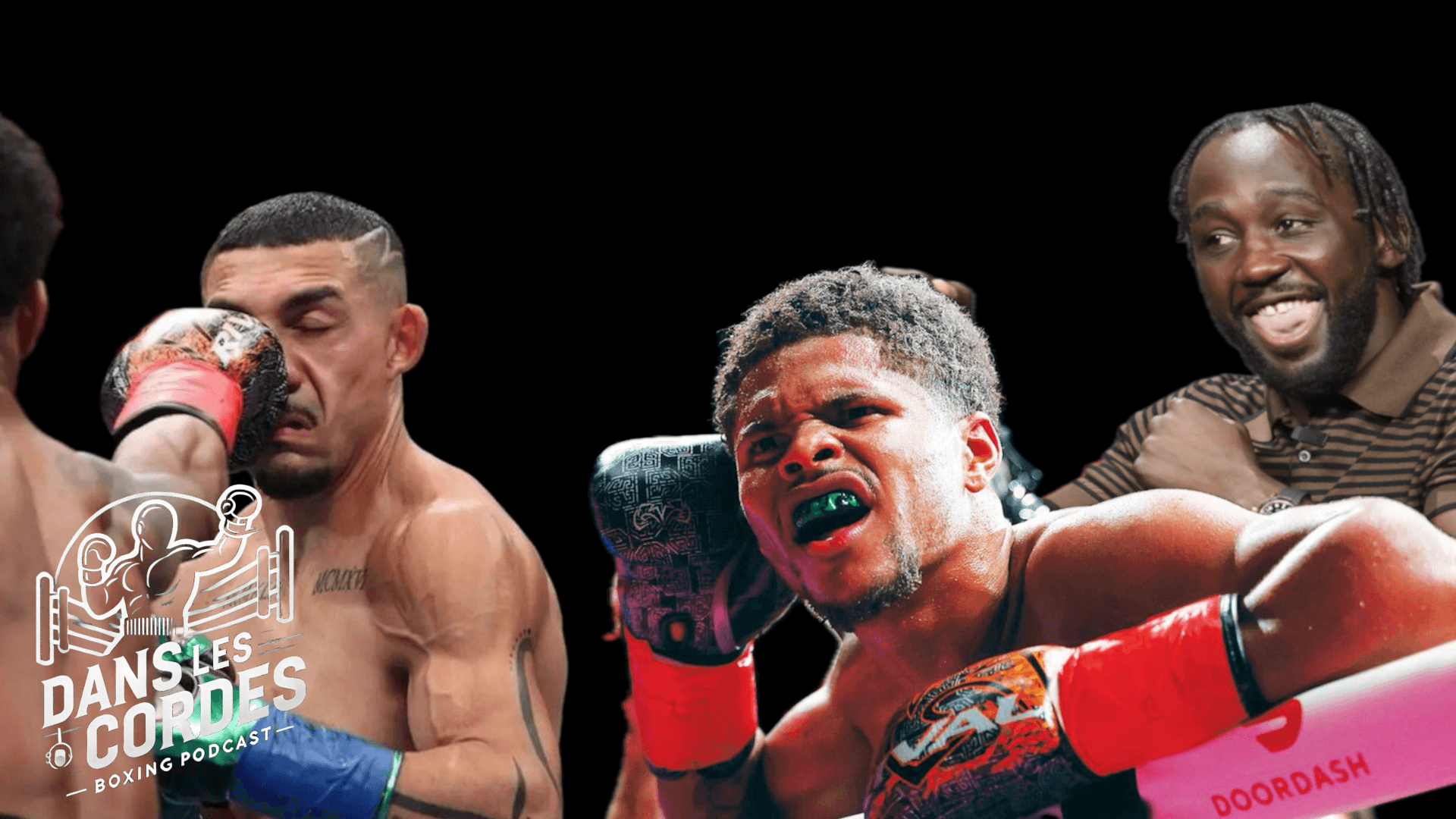
The fight between Shakur Stevenson and Teofimo Lopez summed up that discomfort. Sold as a clash between two important figures on the circuit, it promised at least a clear sporting tension. In the end, it delivered only a highly predictable demonstration. Stevenson controlled the bout through his speed, his timing and his usual reading of exchanges. Lopez, meanwhile, looked too messy, too readable, and unable to impose structure or adjust his approach. Against a fighter like Stevenson, who lives off the opponent's mistakes and counterpunching opportunities, discipline, precision and a serious game plan were required. None of that truly appeared.
It is worth separating two things here. The first is Stevenson's actual level, which remains that of a top-class fighter, extremely difficult to hit cleanly and always capable of killing the rhythm of a fight. The second is the meaning of his victories. Beating this version of Lopez does not tell us much that is new about him. It confirms his technical superiority, but without giving him the added credibility that only a more coherent, more dangerous or more tactically ambitious opponent could have provided. That is why the fight feels revealing of a broader problem: an event can still be manufactured without producing a genuine sporting peak.
The criticism that has returned most often in recent months concerns the way certain careers are being built. For several champions or media stars, the logic seems less about conquest than optimisation. The goal is no longer necessarily to face the best available opponent, but to choose the right name at the right moment, one that offers visibility, money and manageable risk. In that reading, the resume grows thicker, but not always deeper.
Stevenson embodies that debate, just as Devin Haney and Terence Crawford do. No one seriously questions their talent. What fuels the recurring doubt is the sense of a generation deeply concerned with protecting its status, at times to the point of putting career management ahead of confrontation. When a name like Conor Benn emerges as a credible option after an important win, the immediate question is obvious: is this a real sporting challenge, or a matchup designed first for media circulation? The issue is not only aesthetic. It goes to the credibility of the hierarchy itself.
That shift is also tied to the transformation of the market. Reputation no longer depends only on the ring. It is now built through interviews, social media, career narratives and the repeated affirmation of status. A boxer can be treated like a major star before stacking the fights that once used to justify that position. That is the gap that increasingly frustrates people: the prestige of the image sometimes rises faster than the prestige of the path.
The question of weight and cutting belongs to the same logic. Part of the elite gives the impression of operating for years in divisions chosen to maximise competitive advantage while limiting exposure to danger. Massive rehydration, severe cuts and low yearly activity all feed the sense of a more calculated form of boxing. Defensive style is not the issue in itself. It has always belonged to the sport. What raises more questions is the combination of several factors: very cautious defence, careful opponent selection, few fights per year, and a significant gap between the official weight and the real weight on fight night. Over time, the sense of fair confrontation becomes blurred.
Floyd Mayweather is often used as the reference point for this drift. But the comparison has limits. Mayweather eventually rationalised his career, yes, but he did so on top of a first phase built around high-level fights and already well-established sporting legitimacy. The problem with many more recent fighters is that they seem to have adopted the logic of optimisation very early, without first building the same foundation.
Teofimo Lopez represents, in his own way, the other side of the phenomenon. His time at the top was brief, and everything now gives the impression of a trajectory that has already closed. The talent and explosiveness that marked his early rise are no longer enough to hide the technical flaws, questionable decisions and a certain disorder around him. His loss to Stevenson feels less like an accident than the final stage of a slow decline. It also serves as a reminder that a career cannot be protected forever. In trying to avoid certain risks, a fighter can end up arriving too late, or badly prepared, when the real appointment finally comes.
The same broad feeling applies, in a different way, to Ryan Garcia. The case is not identical, but the sense of waste is there as well. He still has obvious gifts: rare hand speed, flashes of timing and the kind of natural potential that once seemed capable of taking him very high. Yet each appearance increasingly feels like another episode in a career clouded by early fame, instability and noise around the sport. Once again, the talent is real, but it is no longer enough to structure a trajectory.
Fortunately, not everything feeds the same fatigue. Naoya Inoue still represents a level of sporting demand that very few fighters can sustain with such consistency. Jesse "Bam" Rodriguez belongs in that category as well, among the fighters whose appeal depends not only on storytelling, but first on the quality of the boxing itself. That is also why some matchups still generate immediate interest while others leave people cold despite their promotional weight. An Inoue-Bam fight is compelling because it rests above all on a logic of level. A Vergil Ortiz-Jaron Ennis fight creates anticipation for the same reason.
Early 2026 does not force a final verdict on the state of boxing, but it does reveal a very clear expectation. The most attentive public is not necessarily asking for more noise, more slogans or more self-proclaimed stars. What it wants above all are readable fights, styles that answer one another, and careers willing to risk being incomplete rather than perfectly protected. At that level, boxing is not short on talent. What it lacks, right now, are the occasions that give that talent its full value.
Article summarizing the latest podcast featured on the homepage.